- Optimist Residence, Fikirtepe, NO:10/35, 34720 Kadıköy/İstanbul
- +90 535 056 01 50
- info@akininaloz.com.tr

RHINOPLASTY
Comprehensive Rhinoplasty and Nasal Aesthetics in Istanbul
Op. Dr. Akın İnalöz offers bespoke rhinoplasty and revision rhinoplasty procedures in Istanbul, combining advanced functional preservation techniques with meticulous aesthetic refinement. Each surgical plan is meticulously tailored to your unique facial proportions and breathing physiology, ensuring harmonious outcomes that prioritize both structural integrity and natural facial balance.
Achieving a balanced and natural facial aesthetic requires a deep understanding of structural anatomy combined with precise surgical execution. Every individual presents a distinct set of anatomical characteristics, skin thickness, and structural strengths, meaning that a standardized approach is fundamentally inadequate for modern nasal surgery. Personalization begins during the initial virtual consultation, where facial symmetry, nasal projection, and underlying cartilage architecture are thoroughly evaluated to establish a comprehensive roadmap. The overarching objective is never to impose a generic template, but rather to enhance your natural features while maintaining a completely authentic and unoperated appearance.
Furthermore, facial proportions are governed by precise mathematical and aesthetic ratios that must be respected during surgical planning. The relationship between the forehead, nasal bridge, lip-columella angle, and chin projection dictates the overall harmony of the profile. By analyzing these angular relationships down to the millimeter, every structural modification is calculated to complement the patient’s individual features rather than overpowering them. This holistic methodology ensures that the final result feels entirely organic, aging gracefully alongside the natural contours of the face over the decades.
Advanced Procedural Overview and Modern Methodologies
Rhinoplasty is widely regarded as one of the most intricate procedures in plastic surgery, requiring an exceptional blend of artistic vision and anatomical precision. Whether addressing structural deviations, congenital asymmetries, breathing impairments through septoplasty integration, or aesthetic refinements such as dorsal hump reduction and tip projection, the approach is strictly customized. Utilizing both open and closed surgical methodologies, Dr. Akın İnalöz ensures that structural support is reinforced rather than compromised, yielding enduring stability and refined aesthetics tailored specifically for international patients seeking uncompromised excellence.
Modern surgical philosophies emphasize preservation and structural reinforcement over aggressive tissue reduction. This contemporary methodology ensures that the long-term structural integrity of the nose remains robust, preventing delayed collapse or functional deterioration over time. By utilizing advanced stabilization techniques, structural grafting when necessary, and precise tissue manipulation, every intervention is engineered to provide both immediate aesthetic improvement and lifelong durability. The integration of ultrasonic instrumentation in appropriate cases allows for millimeter-precise bone remodeling with minimized trauma to surrounding soft tissues, significantly optimizing the early recovery experience.
In addition to structural preservation, contemporary rhinoplasty places immense emphasis on minimizing postoperative morbidity. Traditional techniques often involved aggressive rasping and forceful osteotomies that caused widespread tissue trauma, prolonged swelling, and extensive ecchymosis. Modern preservation principles, conversely, focus on mobilizing bone and cartilage through highly controlled, atraumatic vectors. This protects the delicate periosteum, preserves essential vascular pathways, and ensures that healing progresses rapidly and predictably.
Surgical Techniques: Open Versus Closed Approach
Achieving optimal results in nasal surgery depends heavily on selecting the correct surgical approach tailored to individual anatomical requirements. The closed rhinoplasty technique involves incisions placed entirely within the nostrils, resulting in zero visible external scarring and a typically expedited initial recovery phase. Conversely, the open rhinoplasty approach utilizes a discreet, miniature bridging incision across the columella, providing unparalleled direct visualization of the nasal framework. This method is frequently favored for complex primary cases or revision procedures requiring extensive structural grafting and precise cartilage realignment.
The decision between an open and closed approach is determined by the specific anatomical adjustments required to achieve the desired outcome. Closed techniques are exceptionally effective for conservative dorsal modifications and minor tip adjustments where external access is unnecessary. On the other hand, complex asymmetries, major structural reconstruction, and revision cases benefit immensely from the direct visibility provided by the open approach, allowing the surgeon to execute intricate cartilage sutures and precise graft placements under direct control. Regardless of the chosen pathway, absolute care is taken to ensure that all incisions heal seamlessly, leaving no detectable signs of surgical intervention.
Selecting the appropriate technique also involves anticipating how the soft tissue envelope will drape over the modified framework during the healing cascade. While closed surgery offers the distinct advantage of leaving the intercrural ligaments and primary soft-tissue attachments completely undisturbed, open surgery provides the necessary exposure to correct severe structural twists and congenital irregularities. Dr. Akın İnalöz evaluates these technical trade-offs during the diagnostic phase to select the optimal surgical pathway for each individual anatomy.
Functional Harmony and Airway Preservation
A truly successful rhinoplasty seamlessly unites external aesthetic harmony with uncompromising internal respiratory function. Aesthetic enhancement must never compromise airflow dynamics. During your comprehensive evaluation, internal structures such as the nasal septum and valve areas are meticulously assessed. Correcting deviated septums, resizing turbinates, or utilizing spreader grafts ensures that patients not only achieve their desired aesthetic profile but often experience a significant improvement in overall nasal breathing capacity and long-term physiological comfort.
The internal architecture of the nose functions as a sophisticated aerodynamic system. Altering the external shape without careful consideration of internal valves and supporting cartilages can lead to breathing difficulties. Therefore, functional assessment and aesthetic design are conducted as a single, unified process. Preserving or actively improving nasal airflow ensures that patients enjoy a healthier, more comfortable physiological state alongside their renewed aesthetic confidence, establishing a synergy between visual elegance and respiratory efficiency.
Internal nasal valve collapse is one of the most common causes of functional impairment following poorly executed structural reductions. The nasal valve represents the narrowest cross-sectional area of the airway, dictating overall airflow resistance according to fluid dynamics principles. By incorporating spreader grafts, flaring sutures, or butterfly grafts whenever structural weakness is detected, the procedure actively reinforces this critical zone. Consequently, patients achieve a structurally robust airway capable of supporting optimal oxygen intake during both rest and rigorous physical exertion.
Exploring Specific Rhinoplasty Variations and Specialty Procedures
Modern nasal aesthetics encompasses a wide spectrum of specialized surgical subtypes tailored to distinct anatomical challenges and demographic profiles. Understanding these specialized categories ensures that every unique patient goal is met with the exact surgical strategy required:
Primary Rhinoplasty: Designed for individuals undergoing aesthetic or functional nasal restructuring for the first time. The focus centers on balancing the facial profile, correcting dorsal humps, refining nasal tip projections, and straightening deviated structures while ensuring long-term stability.
Revision Rhinoplasty: A highly sophisticated secondary intervention dedicated to correcting unsatisfactory outcomes, structural collapses, or persistent breathing obstructions resulting from prior operations performed elsewhere. This procedure utilizes advanced grafting techniques to reconstruct damaged frameworks.
Ethnic Rhinoplasty: Tailored to respect and preserve the unique ethnic identity and distinct structural traits of patients from diverse backgrounds. Rather than applying a uniform template, the technique strengthens and refines natural nasal contours while honoring cultural facial harmony.
Preservation Rhinoplasty: An advanced conservative philosophy focused on altering the nasal dorsum and supporting structures from beneath without disrupting the natural dorsal aesthetic lines. This method preserves the keystone area and ligamentous attachments, leading to accelerated recovery and exceptional naturalness.
Ultrasonic (Piezo) Rhinoplasty: Utilizes advanced ultrasonic micro-saw technology to sculpt and reshape nasal bones with extreme precision. By selectively targeting bone without harming surrounding blood vessels, soft tissues, or mucous membranes, postoperative bruising and swelling are significantly minimized.
The Anatomy of Skin Thickness and Structural Adaptability
An often overlooked yet critical element in rhinoplasty planning is the patient’s skin envelope thickness. Skin quality can range from thin and delicate to thick and sebaceous, each presenting unique behavioral characteristics during the healing process. Thick skin possesses less propensity to contract tightly over a reduced structural framework, requiring robust underlying support and specific sculpting techniques to define the nasal tip adequately. Conversely, thin skin demands absolute surgical precision, as even microscopic irregularities or minor graft transitions can potentially manifest visibly beneath the surface.
Recognizing these inherent textural variations allows the surgical team to calibrate structural maneuvers precisely. Tailoring cartilage strength and graft architecture to match the physical constraints of the skin envelope guarantees that the final aesthetic results mature gracefully over the years. This meticulous attention to microscopic detail ensures predictable, stable, and aesthetically superior outcomes across diverse ethnic and anatomical profiles.
Patients with thick sebaceous skin, for instance, benefit greatly from precise debulking of fibrofatty subcutaneous tissue when indicated, combined with high-projection structural grafts that can successfully push against the heavy skin envelope to create definition. On the other hand, patients with thin skin require meticulous camouflage grafting, such as the strategic placement of soft fascial layers harvested locally, to mask sharp cartilage edges and prevent any visible shadowing or contour irregularities in the postoperative period.
Revision Rhinoplasty: Correcting Prior Complexities
Revision rhinoplasty represents the pinnacle of complexity within plastic surgery, often necessitated by previous unsuccessful interventions performed elsewhere. Patients seeking secondary structural correction frequently suffer from compromised structural support, persistent breathing obstructions, pinched nasal tips, residual dorsal deformities, or severe internal scarring. Addressing these multi-layered challenges requires an extraordinarily high degree of technical mastery, extensive anatomical knowledge, and a comprehensive supply of structural grafting material.
When local nasal septal cartilage has been exhausted during previous procedures, alternative donor sites must be utilized to rebuild the missing structural framework. Harvesting autologous cartilage from the auricular concha or the costal (rib) cartilage provides the robust structural support necessary to reconstruct collapsed vaults and re-establish mechanical stability. Every revision plan is approached as an intricate architectural reconstruction, where form and function are painstakingly restored through meticulous grafting, precise scar release, and absolute anatomical realignment.
The International Patient Journey and Comprehensive Recovery Timeline
For patients traveling from the United Kingdom and abroad, the recovery and post-operative timeline is structured to ensure complete safety and comfort. Following the intervention, a protective nasal splint is worn for approximately 7 days, during which initial swelling and minor bruising around the eye contours gradually subside. Most international patients are advised to plan a stay of 8 to 10 days in Istanbul, allowing ample time for the primary post-operative check and safe splint removal before returning home. Comprehensive digital follow-up care is maintained continuously throughout subsequent healing milestones.
Navigating medical travel requires a seamless, stress-free logistical framework. From initial digital consultations and customized itinerary planning to VIP transfers and dedicated post-operative monitoring, every detail is orchestrated to provide ultimate peace of mind. While the majority of noticeable swelling and bruising resolves within the first few weeks, subtle refinement of the nasal tissues continues progressively over many months, ultimately revealing the final, settled contours. Adhering to post-operative guidelines, such as avoiding heavy glasses and strenuous physical exertion during the early healing phase, ensures an optimal recovery progression and long-lasting stability, enabling international visitors to return to their daily routines with absolute confidence.
Long-term tissue maturation following nasal surgery is a gradual biological process. While initial social confidence is restored as soon as external splints and major bruising disappear within the first ten days, the internal healing cascade continues quietly at a cellular level. Micro-edema within the soft tissue envelope dissipates slowly, with the final definition of the nasal tip and dorsum solidifying completely between twelve and eighteen months. Throughout this extended timeline, continuous digital communication channels remain open, ensuring that every international patient receives ongoing guidance, reassurance, and professional oversight until complete structural maturation is successfully achieved.

Op. Dr. Akın İnalöz
Plastic & aesthetic surgeon, Kadıköy, Istanbul
Quick Enquiry
Travelling from the UK for aesthetic surgery?
See how the consultation, treatment and recovery process works, start to finish.
Things You Might Be Wondering
Frequently Asked Questions
While the majority of noticeable swelling and bruising resolves within the first two to three weeks, subtle refinement of the nasal tissues continues progressively over 6 to 12 months, ultimately revealing the final, settled contours.
For closed rhinoplasty, all incisions are internal with zero external scarring. For open rhinoplasty, a tiny, well-concealed incision is placed across the columella, which fades remarkably well over time to become virtually imperceptible.
Patients are typically advised to avoid resting heavy glasses directly on the nasal bridge for at least 4 to 6 weeks, or utilize specialized frame supports. Light walking can be resumed within a week, while contact sports and strenuous physical exertion should be postponed for 6 to 8 weeks.
Rhinoplasty can be meticulously planned to address both aesthetic goals and functional impairments simultaneously. By integrating corrective steps such as septoplasty, turbinate reduction, or spreader graft placement, the procedure actively reinforces internal valve areas, ensuring that long-term nasal breathing capacity is significantly enhanced alongside your new profile.
Most international patients are advised to remain in Istanbul for approximately 8 to 10 days post-surgery, allowing sufficient time for the primary medical check and safe removal of the nasal splint before your return flight. Following your departure, continuous digital follow-up care and remote monitoring are maintained to oversee your ongoing healing progress safely from home.
Travelling from the UK for rhinoplasty surgery?
See how the consultation, treatment and recovery process works, start to finish.
Op. Dr. Akın İnalöz
Natural Aesthetic Evolutions
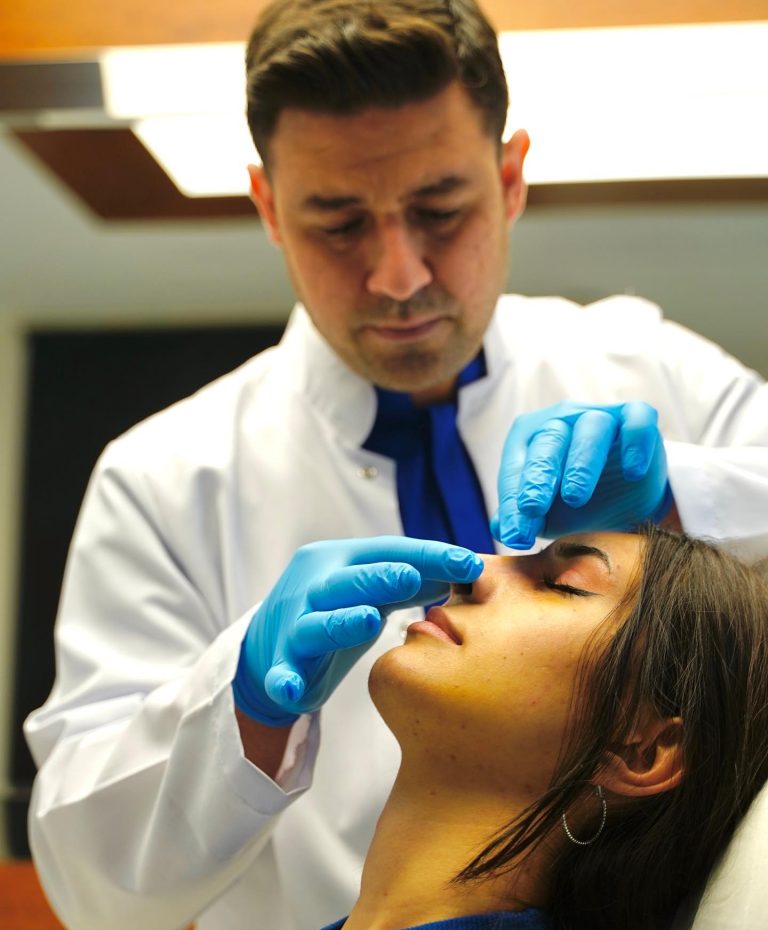
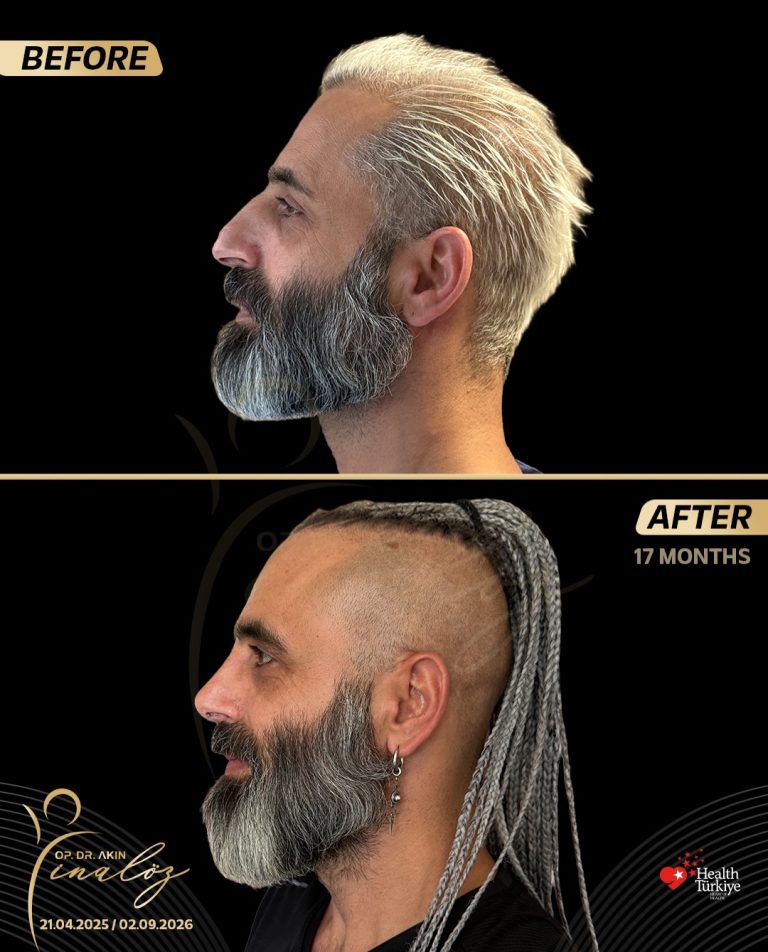
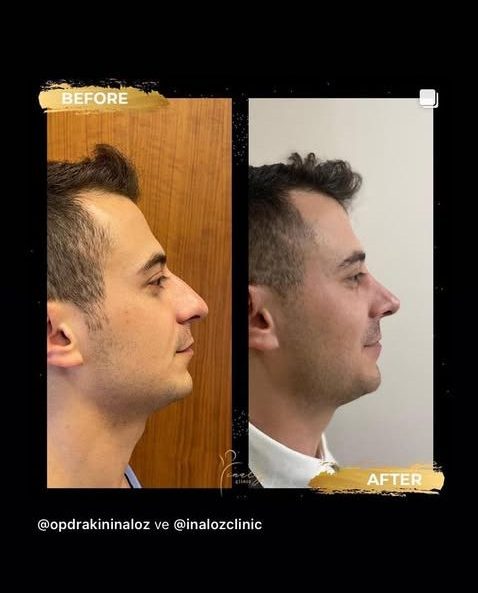
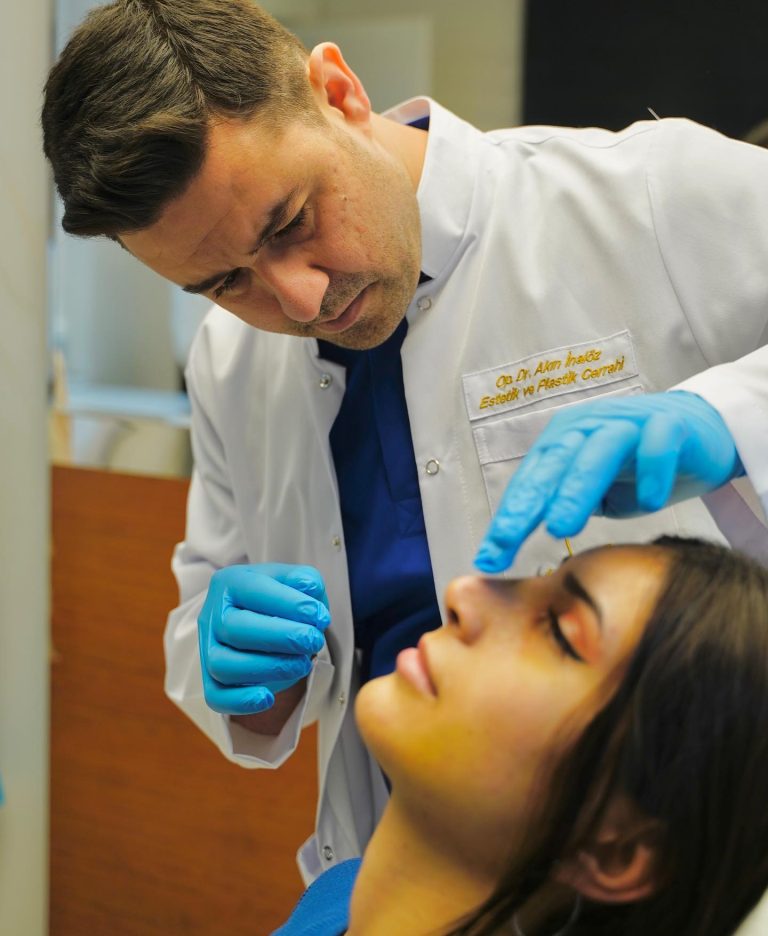
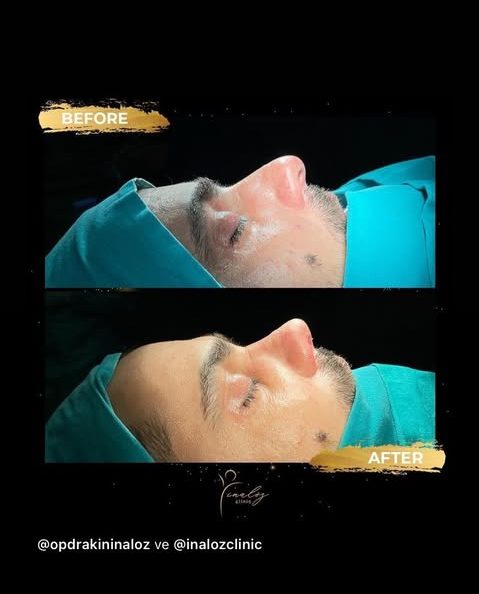
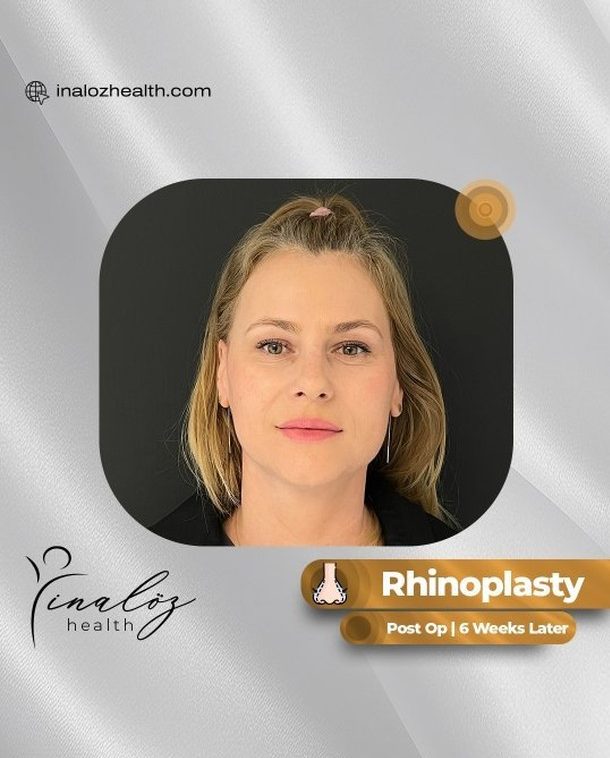
My goal is not just to perform a procedure, but to guide each patient through a safe, well-planned process toward a result that feels genuinely their own.
Results shown are of actual patients and may vary.
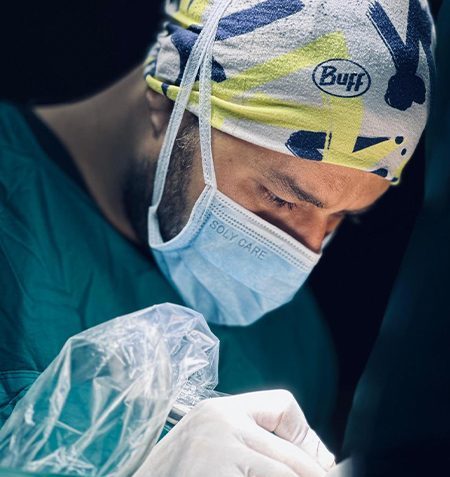
PERFORMED BY
Op. Dr. Akın İnalöz
Plastic, reconstructive and aesthetic surgeon based in Kadıköy, Istanbul, with over 10 years of experience in rhinoplasty surgery procedures.
RELATED PROCEDURES
Considering Rhinoplasty Surgery?
Contact info
- Optimist Residence, Fikirtepe, NO:10/35, 34720 Kadıköy/İstanbul
- +90 535 056 01 50
- info@akininaloz.com.tr